Why Poor Fastener Installation Causes Metal Roof Leaks in Alberta
August 5, 2026
Alberta climate puts unique stress on buildings, and property owners trust metal roofing to handle the worst of it. At Advanced Roofing Systems Ltd., we see how extreme temperature swings in Edmonton cause materials to expand and contract day after day. A solid metal installation is incredibly resilient against wind and snow but it is only as watertight as the hardware holding it down. When moisture gets inside a property with a metal exterior, the problem almost always points straight to the fasteners.
Small installation mistakes during the initial build create immediate vulnerabilities that worsen over time. A screw driven just a fraction of an inch off its mark creates a direct path for rainwater to reach your underlying roof deck. Understanding exactly how these hardware failures happen is the first step to diagnosing a hidden moisture problem. Let us look at the most common reasons poor fastener installation leads to expensive interior damage and how professional repairs solve the issue.
What We Cover:
- Over-tightened Fasteners Crushing the Washers
- Under-tightened Screws Failing to Seal
- Off-center Drives Missing the Purlin
- Why DIY Fastener Adjustments Usually Make Leaks Worse
Over-tightened Fasteners Crushing the Washers
Metal roofing relies on specialized screws fitted with neoprene or rubber washers to create a watertight seal against the metal panel. When a drill is set to a high torque, the installer can easily drive the screw down too hard and completely crush the washer. This forces the rubber to bulge out past the metal screw head, exposing it directly to harsh winter conditions and prolonged sunlight. Over a few short seasons, the exposed rubber dries out, cracks, and flakes away to leave a gaping hole for rainwater.
Why is my metal roof leaking at the screws?
We hear this question often when we inspect local properties. The answer usually comes down to that compromised washer losing its grip and letting standing water seep past the threads. The fix requires extracting the damaged fasteners and installing a slightly oversized screw with a fresh washer to properly seal the enlarged hole.
→ From a professional standpoint: A correctly installed fastener should seat firmly against the panel with the rubber washer visibly compressed but never bulging past the edge of the metal head.
Under-tightened Screws Failing to Seal
Installers who are rushing or worried about crushing the washers often make the opposite mistake by under-tightening the hardware. A screw that is not driven deep enough fails to compress the rubber gasket against the metal surface. This leaves a microscopic gap between the panel and the fastener head where capillary action can draw water upward and straight down the screw shaft. High winds in places like Sherwood Park can even cause under-tightened panels to rattle, further backing the screws out of the wood decking over time. The solution here involves a careful property inspection to identify loose hardware and properly torqueing new fasteners to establish a tight seal.
→ A quick tip to remember: If you can spin the washer beneath the screw head with your fingernail, the fastener is too loose and will eventually let water inside the building.
Off-center Drives Missing the Purlin
Driving a screw at an angle rather than perfectly perpendicular to the metal panel creates an uneven seal. One side of the washer gets completely crushed while the other side barely touches the metal. Sometimes an angled drive means the installer entirely missed the wood purlin or decking underneath the metal. These floating screws have nothing to bite into, meaning they offer zero holding power and leave an open hole right through your roofing material. Our residential roofing crews fix this by removing the angled screw, filling the misaligned hole with specialized roof sealant, and driving a new fastener straight into solid wood nearby.
→ From a professional standpoint: A screw driven at an angle will almost always back itself out after a single season of normal thermal expansion and contraction.
Why DIY Fastener Adjustments Usually Make Leaks Worse
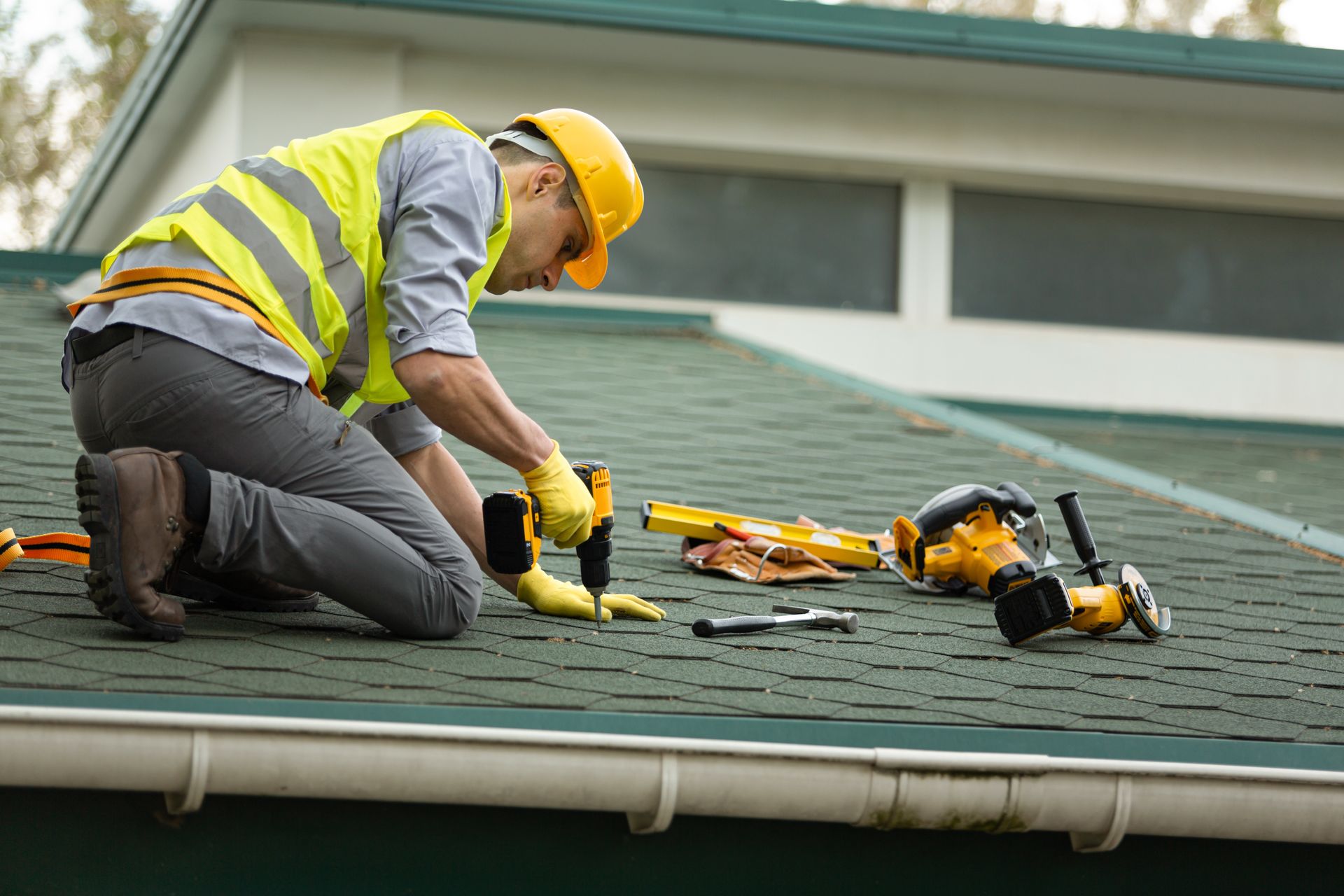
Property owners who spot a loose screw often grab a standard drill to tighten it back down. This approach strips the wood decking underneath because the original hole is already degraded by moisture. Adding silicone caulk over the top of a leaking screw is another common DIY mistake that simply traps moisture against the metal and accelerates rust. A proper roof repair demands exact torque settings and specific replacement fasteners that match your panel profile. Attempting to fix the hardware without trade experience often leads to tearing the metal panel itself, which turns a minor fastener replacement into a major material repair.
→ A quick tip to remember: Caulk is never a permanent substitute for a properly seated mechanical fastener with an intact rubber gasket.
Fixing Fastener Leaks Before Damage Spreads
A loose screw might seem like a tiny defect, but it compromises the weather resistance of your entire property. Addressing compromised hardware early prevents minor drips from rotting your roof deck and ruining your interior drywall. If you suspect your metal panels are letting water in, schedule an inspection with our team to secure your building.
Share This Blog